Region ASIA
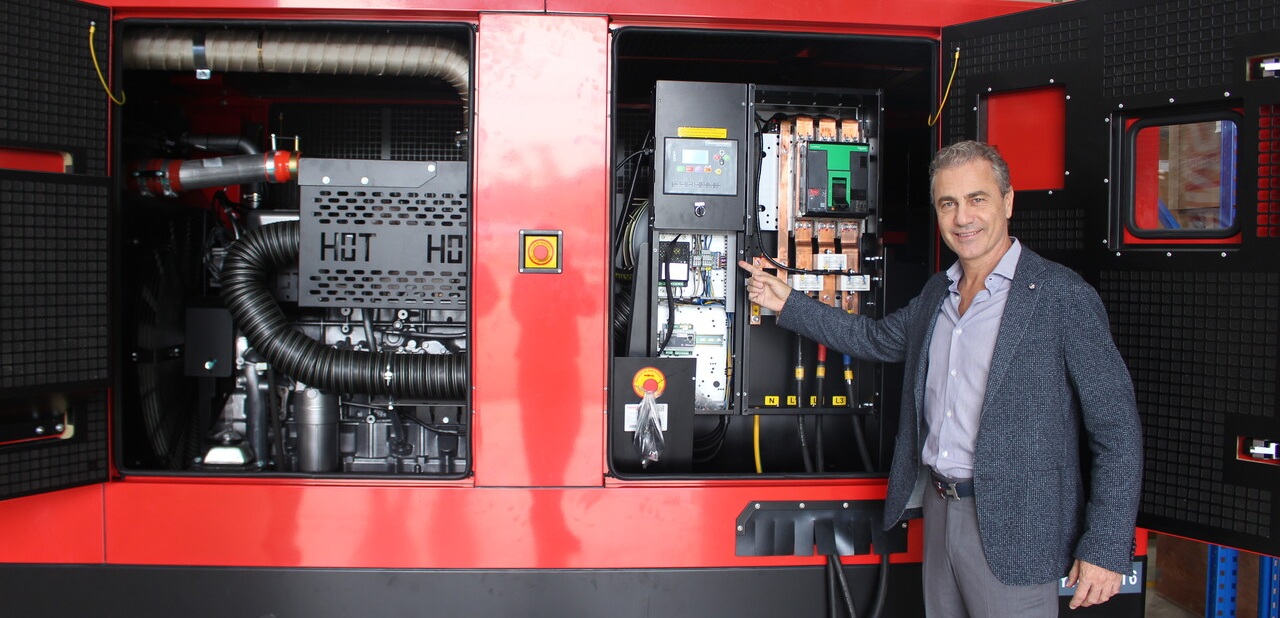
As power reliability becomes increasingly critical in an era defined by digitalization, artificial intelligence, and rapid industrial growth, demand for advanced power generation and backup energy solutions continues to rise worldwide. Recognizing the opportunities presented by this trend, HIMOINSA, a leading global provider of power technology solutions, has begun a strategic push into the South Korean market.
In a recent interview with Electric Times (전기신문)—one of South Korea's leading trade publications covering the power, energy, electrical engineering, and utility sectors, Marco Perillo, HIMOINSA's Asia-Pacific (APAC) Region Head, shared his insights on global generator market trends, evolving power reliability requirements, and the company's medium- to long-term growth strategy for Korea.
◆ First, could you briefly introduce Himoinsa as a global power solutions company for our readers?
"Himoinsa is a global company that directly manufactures core equipment for the power generation sector, such as generators, lighting towers, and battery systems. Founded in Spain in 1982, we established ourselves as a high-end brand, primarily in Europe, and reached a new turning point in 2015 when we became part of Japan's Yanmar Group. Currently, we operate in over 130 countries with 9 production factories, and we supply products to the APAC region from our factories in China and Spain."
"Because industrial infrastructure and market characteristics vary by country in Asia, a flexible, customized strategy tailored to each country and market demand is essential. Notably, as AI and data center businesses have grown rapidly in advanced infrastructure nations like Korea, Japan, and Australia, Himoinsa has recently established an internal department dedicated to power solutions and engineering. Our key blueprint is to respond more flexibly than other brands to the needs of each sector, whether for general construction, rental, standby, or industrial use."
"The engine accounts for an absolute 70 to 80% of a generator. Therefore, the combination of Yanmar, a world-class industrial engine manufacturer, and Himoinsa, with its outstanding generator manufacturing capabilities, is a perfect match. The two companies shared the same target market even before the merger, and in particular, because Himoinsa had been building generators using Yanmar engines for a long time, there was absolutely no friction during the technological integration process. Recently, Himoinsa's HGY Series, equipped with Yanmar's large-capacity high-end 'GY Series' engine that reaches up to 3MW, was developed, giving us the competitiveness to target the global market."

"Unlike low-end markets that focus on price competition, the Korean market strongly demands high-quality, high-end products, with customers placing great importance on product durability, technical support, and after-sales service. This aligns perfectly with the philosophy of Himoinsa, which ranks number one in market share as a premium brand in Europe. Recently, the strategic value of the Korean market has significantly increased due to the rapid rise of AI data centers, alongside the construction, defense, and industrial markets. It has been a few years since we started our cooperation with our official partner, Kwangnam Company. Although we may still be in the 'baby' phase in the Korean market, we are sparing no investment. We aim to achieve remarkable growth within a few years by not only strengthening marketing and participating in exhibitions to raise brand awareness but also drastically improving local stock availability and engineering technical support capabilities."
"Until now, the global data center market has been dominated by a few giant companies like Cummins, Caterpillar, and MTU. However, by joining the Yanmar Group, Himoinsa has acquired the capability to manufacture and procure top-tier engines in-house, enabling us to compete on equal footing with these giants. As a result, we signed a contract last year to supply 200MW of data center generators to a major Chinese EPC company. We have built a flawless large-capacity, high-quality lineup targeting the demanding high-end data center market, and to this end, we are building a new factory in Spain exclusively for power solutions. Furthermore, in step with global eco-friendly trends, we have already secured engines that meet US EPA Tier 2 and European Stage 5 emission standards. We are fully prepared with a technology roadmap that includes biodiesel compatibility as well as future transitions to gas and hydrogen engines."

"In the past, I first pioneered the Korean market as Fiat's powertrain manager. At the time, there were absolutely no Fiat engine sales in Korea, but in just one or two years, we achieved the milestone of supplying 3,000 engines for Tata Daewoo commercial vehicles. Through that process, I realized that Korean customers are detail-oriented technologically and demand very high standards for quality and after-sales service. Although the product I handle has changed from automotive engines to large generators, I believe the core nature of the Korean market—demanding flawless quality and immediate technical support—remains the same."
"Our entry into the Korean market itself may have been a bit later than existing multinational competitors, but Himoinsa holds the cards to shake up the Korean market. We have put together all the puzzles for success: European high-end generator manufacturing know-how, Yanmar's top-tier engine technology, production bases located in Asia, and an outstanding local partner. In the mid-to-long term, I want to stand as one of the most powerful 'key players' changing the landscape in the Korean generator market."
"First is the presence of an expert local partner. Our partner, Kwangnam Company, has long served as an agency for both Himoinsa and Yanmar. It is rare to find a partner who perfectly understands the technologies of both core pillars: the engine and the generator. We also have a technical support network that goes beyond simple equipment delivery to guarantee rapid parts supply and thorough after-sales service.

Finally, there is 'flexibility.' The requirements for data centers and advanced semiconductor fabs vary widely from site to site, including voltage specifications, noise control, and layouts. Massive global competitors face limitations in reflecting specific customer requests in their designs due to standardized systems. In contrast, Himoinsa makes it possible to immediately meet complex, customized site requirements through customer-centric engineering."